Ask around Kendall this year and you'll hear the same pitch, phrased slightly differently each time: Galloway Glen gets you Pinecrest-style space, Pinecrest-adjacent schools, and Pinecrest-scale lots for something like 30 percent less. It's become a kind of shorthand among agents working the corridor, and like most shorthand, it's true enough to repeat and specific enough to mislead.
The discount exists. Early 2026 analysis of Kendall's luxury single-family segment put it in those terms directly, framing the Baptist/Galloway pocket, the cluster of neighborhoods around Baptist Hospital that includes Galloway Glen, as a way to buy Pinecrest fundamentals at a meaningfully lower basis. What that framing leaves out is which sale you're comparing against. And in a corridor where the highest closed sale of the quarter can run 40 percent above the next most comparable one, that omission is the whole ballgame.
What Galloway Glen actually is
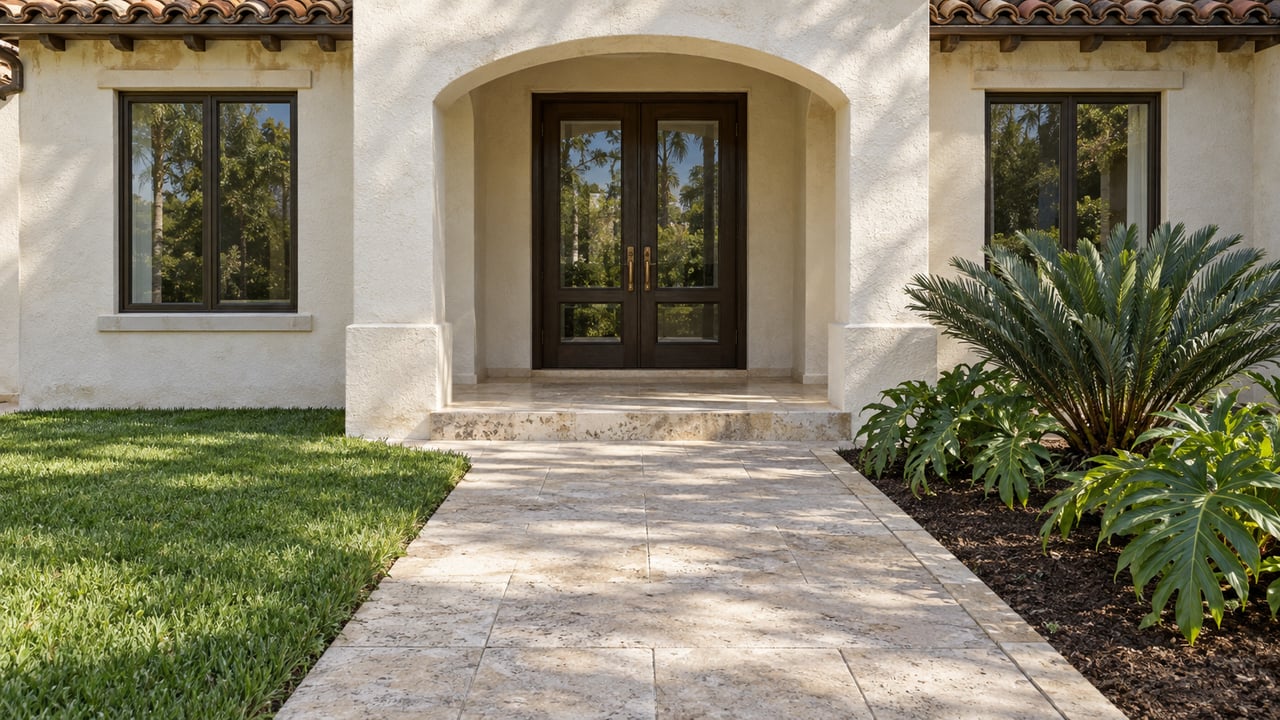
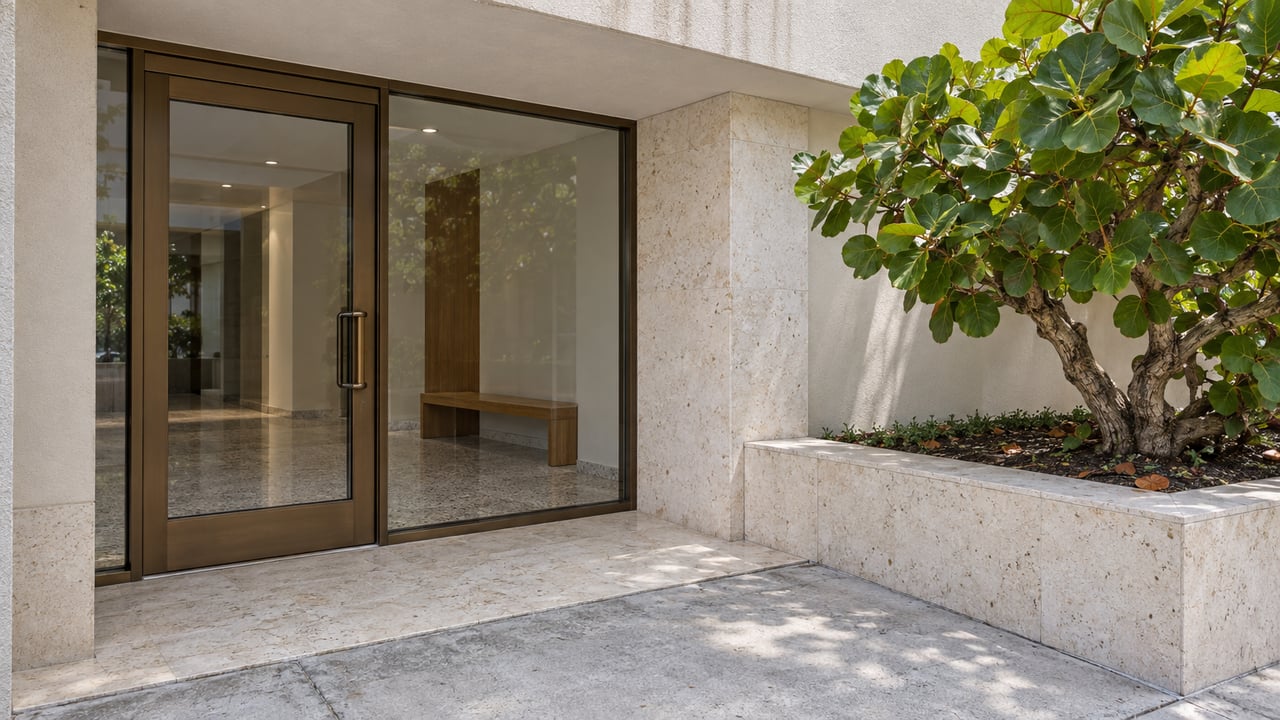
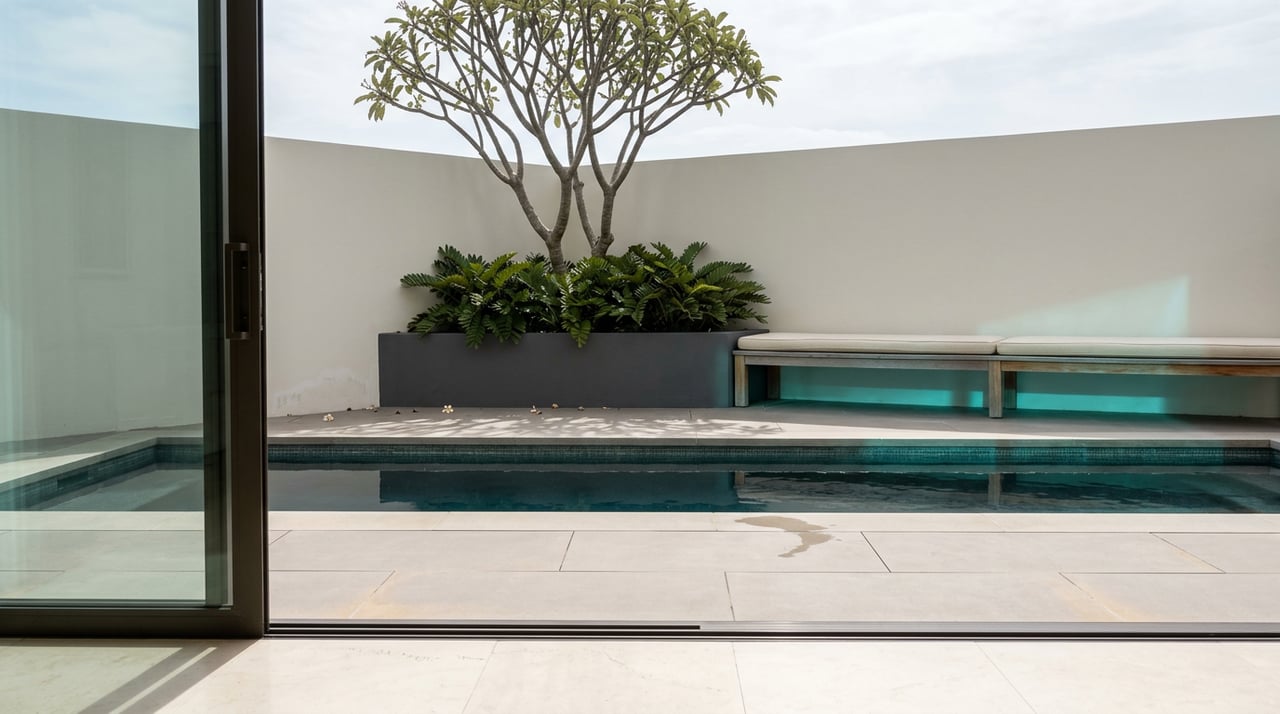
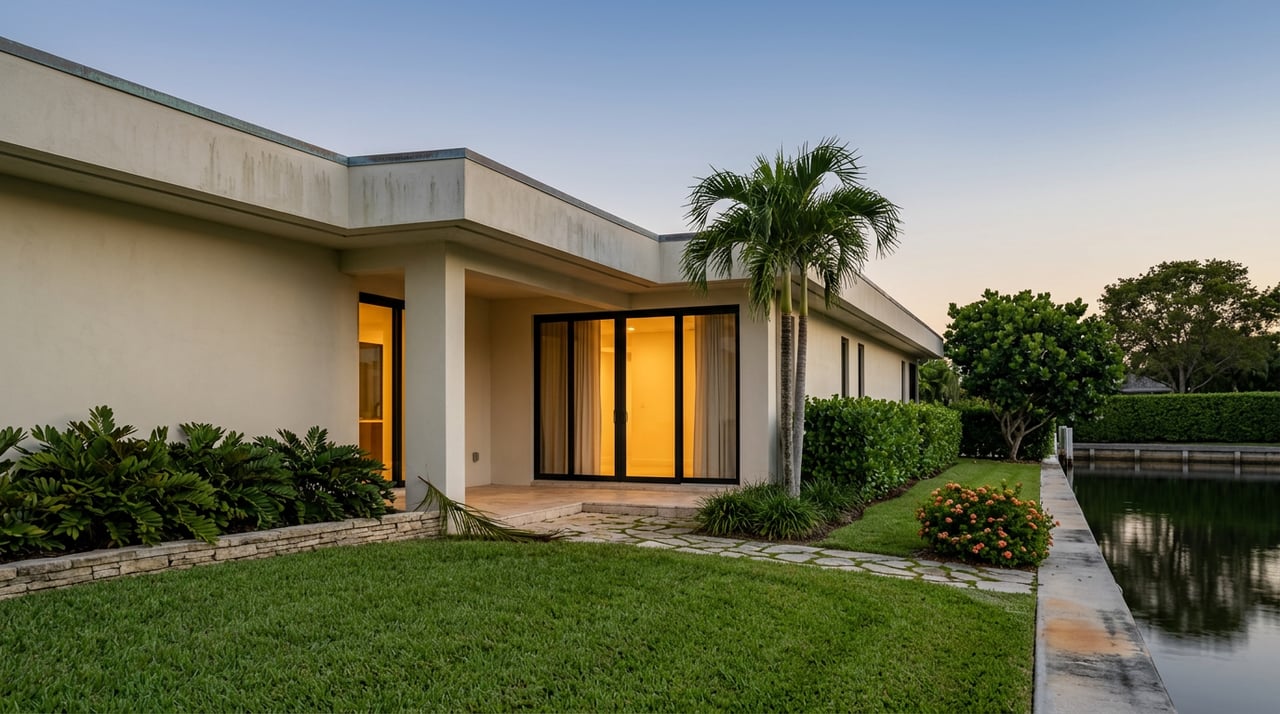
Galloway Glen sits just south of Kendall Drive, roughly between 87th and 97th Avenues, a quiet grid of around 400 homes built between 1947 and 2014 on lots that typically run three quarters of an acre to a full acre. Many lots back onto canals. Most homes carry pools. The neighborhood's proximity to Baptist Hospital and to the major east-west and north-south expressways that cross Kendall makes it functional in a way that doesn't show up in a listing photo but shows up in every resident's actual week.
None of that is controversial. Where it gets interesting is what happens when you try to price it against Pinecrest, because Pinecrest sets one anchor and Galloway Glen sets another, and the gap between those anchors moves depending entirely on which specific sale you're using to measure it.
Ceiling and baseline are not the same number
Here's the mechanism that early 2026 market data actually revealed, and it's more useful than the 30 percent headline.
In the Kendall luxury segment that quarter, the highest closed sale in the Baptist/Galloway pocket reached about $721 per square foot. That's a real number from a real closing. It is also, by definition, the top of the range, not the middle of it. One corridor over, in Killian, the ceiling sale closed at $5,000,000 for a home at 8998 SW 108th Street, working out to roughly $1,069 per square foot. That's the kind of number that gets repeated at dinner parties and then anchors every seller's expectation in the zip code for the next six months.
Here's the tell that the ceiling isn't the baseline: in that same Killian sample, a second and more representative closing at 11220 SW 95th Street sold for $4,510,000, or about $759 per square foot, roughly $310 less per square foot than the trophy sale a few blocks away. Same corridor. Same broad product category. A 29 percent gap in price per square foot depending on which comp you pick.
| Corridor | Ceiling sale (Q1 2026) | Price per square foot |
|---|---|---|
| Baptist/Galloway | Highest sample sale | About $721 |
| Killian | 8998 SW 108th Street, $5.0M | About $1,069 |
| Killian (practical benchmark) | 11220 SW 95th Street, $4.51M | About $759 |
| The Falls | 9130 SW 140th Street | About $610 |
The lesson isn't that Killian is expensive and The Falls is affordable. It's that every one of these corridors has a ceiling and a baseline, and the two numbers can sit a few hundred dollars per square foot apart even within the same nine or ten blocks. Confuse them, as a seller, and you list from the ceiling. Confuse them, as a buyer trying to figure out if Galloway Glen is really "cheaper," and you either overpay for a comp that isn't representative or walk away from a real discount because you compared it to the wrong number.
Where the friction actually shows up
The same early 2026 review flagged Baptist/Galloway specifically as the corridor where the gap between what sellers ask and what buyers actually close at is showing up most clearly. The report called this pocket the market's liquidity engine, meaning it's where deals actually happen at volume, but paired that with a warning that sellers there need to stay disciplined because that ask-over-close gap is wider here than in the tighter, scarcer Killian market.
That's the transaction-level friction worth understanding before you write an offer or set a list price in this corridor. A seller who anchors to the $721 ceiling sale, assuming their similarly sized home should command something close to it, is very likely to sit on the market waiting for a buyer willing to pay trophy pricing for a non-trophy property. Kendall overall bore this out in the first quarter of 2026: median days on market rose noticeably compared to the year before, more than half of recent sales required at least one price reduction before closing, and price per square foot across the broader submarket was adjusting down from where it peaked in 2025. Roughly seven and a half months of inventory sat on the market during that window, a level that hands real negotiating leverage to buyers willing to do their homework.
The pattern that runs backward from what you'd expect
Here's the part that should reshape how you think about the "discount" claim entirely. In that same Q1 2026 data, older homes across Kendall were selling faster than new construction, not slower. The reason wasn't nostalgia or charm. It was pricing. Older product was priced against what buyers had actually paid for comparable homes recently. New construction, by contrast, often carried a premium of more than $100 per square foot over resale product in the same corridor, priced against what the builder hoped the market would eventually support rather than what it was currently paying. That aspirational pricing meant new construction sat longer, even though it was, on paper, the more upgraded product.
Put those two findings together and the real story about Galloway Glen comes into focus. The "30 percent cheaper than Pinecrest" framing isn't really a location story. It's a pricing-discipline story. A well-priced, realistically comped older home in Galloway Glen genuinely can deliver Pinecrest-adjacent land, proximity to schools like Gulliver, Palmer Trinity, and the Riviera-area independent schools, and easy access to the retail corridor around The Falls, at a real discount to comparable product east of the Palmetto Expressway. A home in the same neighborhood priced off last quarter's ceiling sale is not a discount at all. It's the same aspirational math that's currently sitting unsold in new construction, just wearing an older roof.
Kendall, in other words, is not a lesser version of Pinecrest waiting to be discovered. It becomes a genuine Pinecrest alternative specifically where it offers something the eastern market can't easily replicate: larger lots, newer product mixed with legacy inventory, and a value equation that only holds up when the comp underneath it is the right comp.
What this means if you're comparing the two markets yourself
If you're cross-shopping Pinecrest against Galloway Glen this fall, the corridor-level data suggests a few practical checks before you trust any single number you're handed:
- Ask for the full range of recent closings in the specific pocket, not just the highest one. A single trophy sale tells you what's possible, not what's typical.
- Compare price per square foot against homes of similar age and condition. An older, realistically priced resale and a new-construction listing two doors down are not interchangeable comps right now, even on the same street.
- Watch days on market as a signal, not just price. In a corridor where more than half of recent sales needed a price cut to close, a long listing age often means the seller anchored high, not that something is wrong with the home.
- Treat inventory levels as leverage. Months of supply in the seven-range, as Kendall carried in early 2026, generally favors buyers willing to negotiate rather than chase.
None of this requires distrust of the neighborhood. It requires reading the comp sheet the way a local reads it, which is exactly the kind of granular, corridor-by-corridor interpretation that separates a real discount from a repeated headline.
If you're weighing Galloway Glen against Pinecrest, Palmetto Bay, or Coral Gables and want a comp read that goes past the median, the team at Elena Kemper Group has spent decades working these specific corridors and can walk you through which recent sale actually applies to the home you're looking at. Contact Us to start that conversation before you write an offer or set a list price.