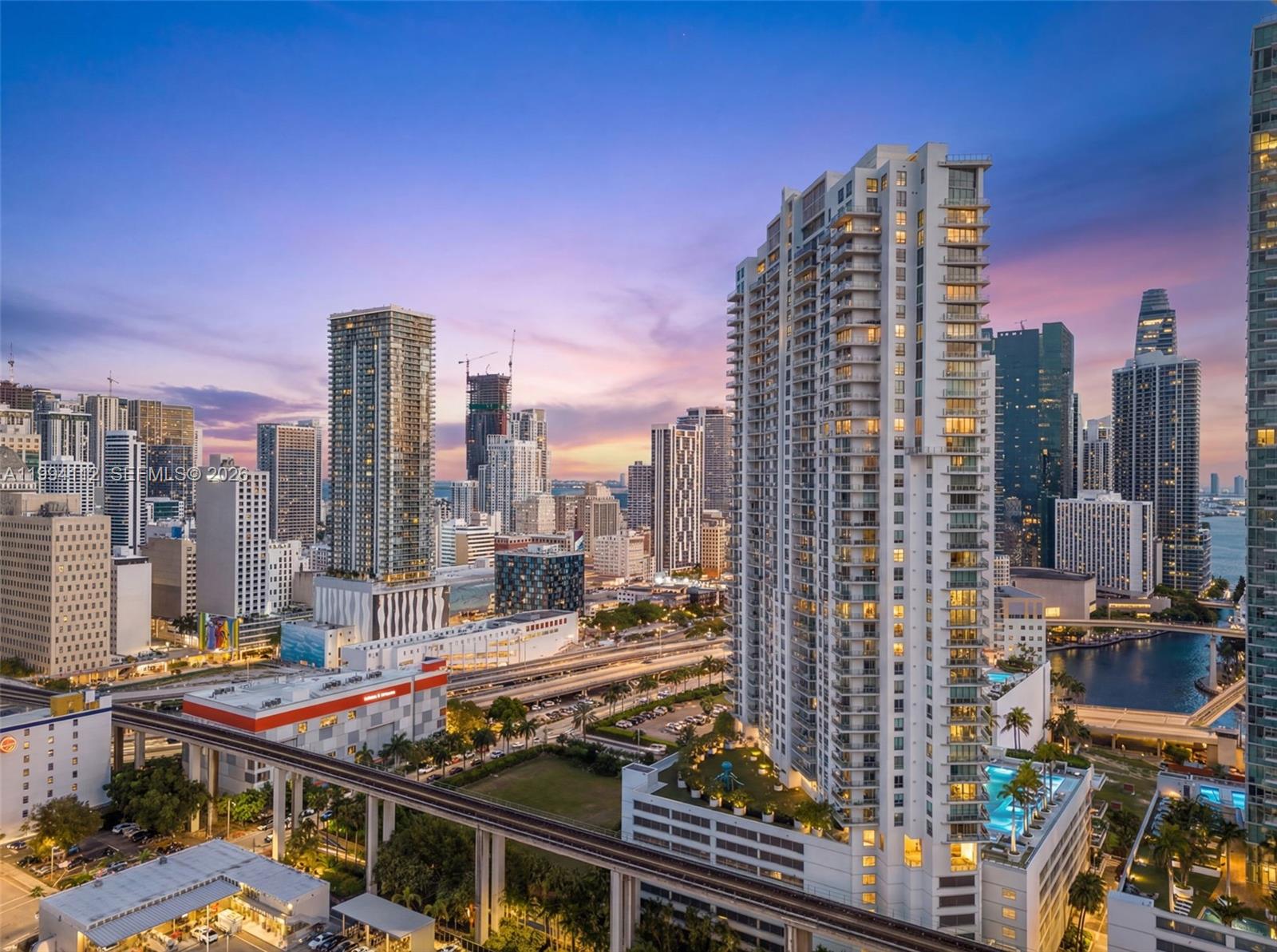
Downtown Miami is where the city itself was born — and where its skyline continues to redefine what a modern American downtown looks like. Bordered by the Miami River, Biscayne Bay, and the Brickell financial district, Downtown Miami sits at the center of a 3.8-square-mile Greater Downtown area anchored by Flagler Street to the east-west and Biscayne Boulevard running north-south. It's a place where major museums, government offices, banks, and universities sit blocks from waterfront parks and an ever-expanding wall of residential towers — a genuinely urban Miami experience that stands apart from the city's beach-driven reputation.
Downtown Miami appeals to young professionals, investors, and urban dwellers who thrive in fast-paced, energetic environments, drawn by its walkability, its transit access, and a real estate market that remains, relative to Miami's luxury waterfront neighborhoods, one of the city's most accessible entry points.
Miami's origin story is Downtown's origin story. As late as 1895, the Florida State Census found just nine settlers living along the Miami River. That changed the following spring, when railroad baron Henry Flagler — at the urging of local landowner Julia Tuttle — extended his Florida East Coast Railway into Miami, with the first train arriving on April 13, 1896. Miami officially incorporated as a city on July 28, 1896, with an estimated population of just 700, centered on the north bank of the Miami River along what is now South Miami Avenue.
Growth accelerated through the early 20th century as Flagler's Royal Palm Hotel and surrounding development drew migrants and investment, and by the mid-20th century Downtown had become the region's established commercial core. In more recent decades, the neighborhood has "Manhattanized" alongside the broader Greater Downtown area, producing the dense cluster of high-rises now known locally as the "Biscayne Wall" — a skyline transformation that has continued into the 2020s with a fresh wave of residential towers.
Downtown Miami's boundaries run east of Interstate 95, between the Rickenbacker Causeway to the south and the Julia Tuttle Causeway to the north, putting the neighborhood within easy reach of Brickell, Edgewater, Miami Beach, and the broader Miami-Dade highway network. Flagler Street and Biscayne Boulevard anchor the neighborhood's grid, while Bayfront Park and the Miami River waterfront provide green space and water views throughout the urban core.
The neighborhood is genuinely walkable and transit-connected, home to major museums, banks, government buildings, and universities alongside its residential towers — everyday conveniences that make Downtown practical for full-time living, not just a place to visit. Metromover and Metrorail service connect residents throughout the urban core and into Brickell and beyond, while Miami International Airport remains a short drive away.
Downtown Miami remains the most affordable entry point into Miami's luxury condo segment, with luxury condos closing Q1 2026 at a median of roughly $730 per square foot — notably below Brickell's $950 and Edgewater's near-$1,000 mark. Across the broader market, Downtown condos have recently traded around $718 per square foot, with the overall neighborhood median sale price near $580,000 to $675,000 as of mid-2026, and single-family homes averaging $438 per square foot where available.
The market currently favors buyers: homes are taking an average of roughly 150 days to sell, well above the citywide average, and Redfin rates competition as low, with multiple-offer situations rare. That said, Downtown Miami led Greater Downtown in price appreciation for price per square foot in Q1 2026 — even amid softer overall pricing, buyers are paying a premium for the best-positioned units. Older buildings (30-plus years) offer some of the market's most accessible pricing, generally $280,000 to $410,000, though buyers should factor in higher insurance and post-Surfside regulatory compliance costs common to aging Miami-Dade high-rises.
What makes Downtown Miami unique among Miami neighborhoods?
Downtown Miami is the commercial, financial, and cultural center of South Florida — the neighborhood where the city itself was founded in 1896. It combines major museums, government and banking institutions, universities, and an ever-expanding residential skyline in a way no other Miami neighborhood can claim.
What types of homes are available in Downtown Miami?
Downtown Miami's housing stock is overwhelmingly condominiums, ranging from accessible units in older 30-plus-year buildings to new luxury towers, alongside a smaller supply of single-family homes at the neighborhood's edges.
What is the price range for homes in Downtown Miami?
As of 2026, Downtown Miami condos have traded around $718 to $730 per square foot, among the most accessible pricing in Miami's luxury condo segment, with older buildings offering units from roughly $280,000 to $410,000 and newer luxury towers commanding significantly more.
Is Downtown Miami a good neighborhood for families?
Downtown Miami skews toward young professionals and urban dwellers, though families do live in the neighborhood. School zoning varies by specific area — students from Brickell attend Southside Elementary School, while those in the Central Business District may attend Riverside Elementary School.
What amenities are nearby?
Downtown Miami offers major museums, Bayfront Park, banking and government institutions, universities, and a growing dining and nightlife scene, with Brickell's financial district and shopping immediately adjacent.
How are the commuting options from Downtown Miami?
Metromover provides free, automated transit throughout the urban core, while Metrorail connects Downtown to Brickell and other parts of Miami-Dade County. Interstate 95 provides direct highway access, and Miami International Airport is a short drive away.
Is Downtown Miami a good real estate investment?
Downtown Miami's status as the most affordable entry point into Miami's luxury condo market, combined with continued development and strong long-term demand from young professionals and investors, supports its case as a value-oriented play within Miami's broader market — though buyers should weigh current buyer's-market conditions, longer days on market, and building-specific insurance costs before purchasing.
24,316 people live in Downtown, where the median age is 38 and the average individual income is $83,115. Data provided by the U.S. Census Bureau.
Total Population
Median Age
Population Density Population Density This is the number of people per square mile in a neighborhood.
Average individual Income
Downtown has 13,136 households, with an average household size of 2. Data provided by the U.S. Census Bureau. Here’s what the people living in Downtown do for work — and how long it takes them to get there. Data provided by the U.S. Census Bureau. 24,316 people call Downtown home. The population density is 28,622 and the largest age group is Data provided by the U.S. Census Bureau.
Total Population
Population Density Population Density This is the number of people per square mile in a neighborhood.
Median Age
Men vs Women
Population by Age Group
0-9 Years
10-17 Years
18-24 Years
25-64 Years
65-74 Years
75+ Years
Education Level
Total Households
Average Household Size
Average individual Income
Households with Children
With Children:
Without Children:
Marital Status
Blue vs White Collar Workers
Blue Collar:
White Collar: