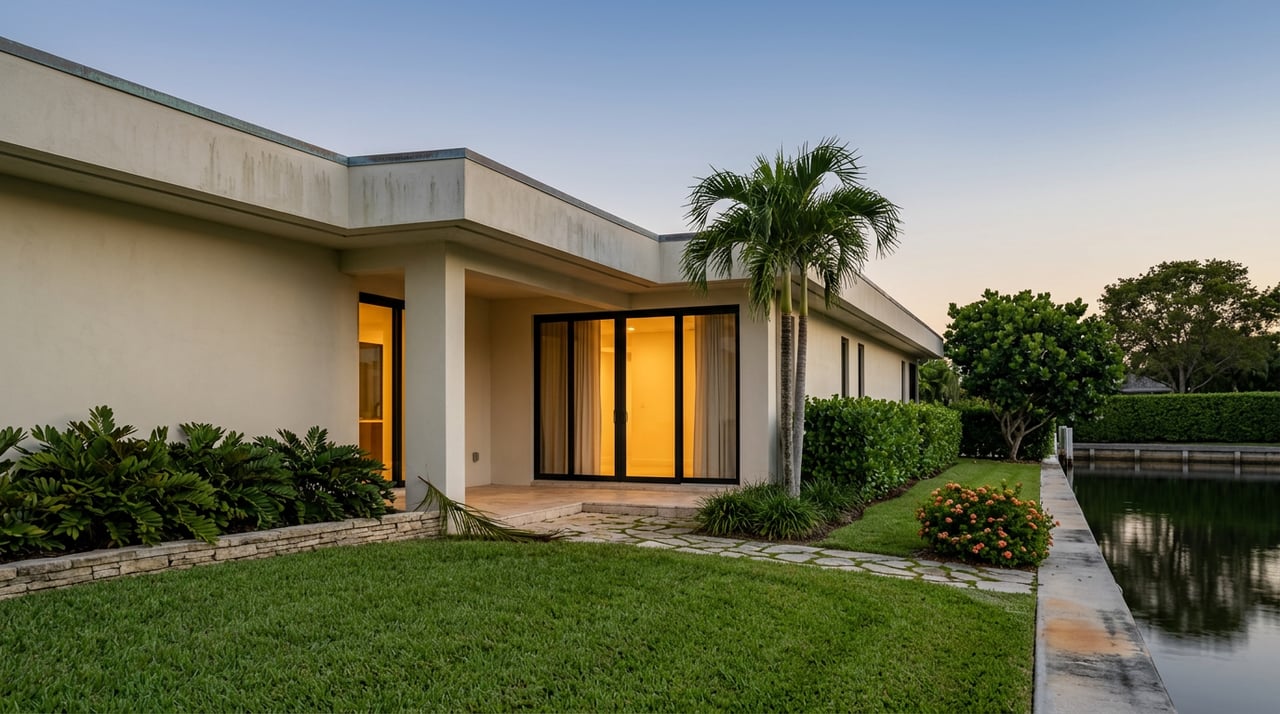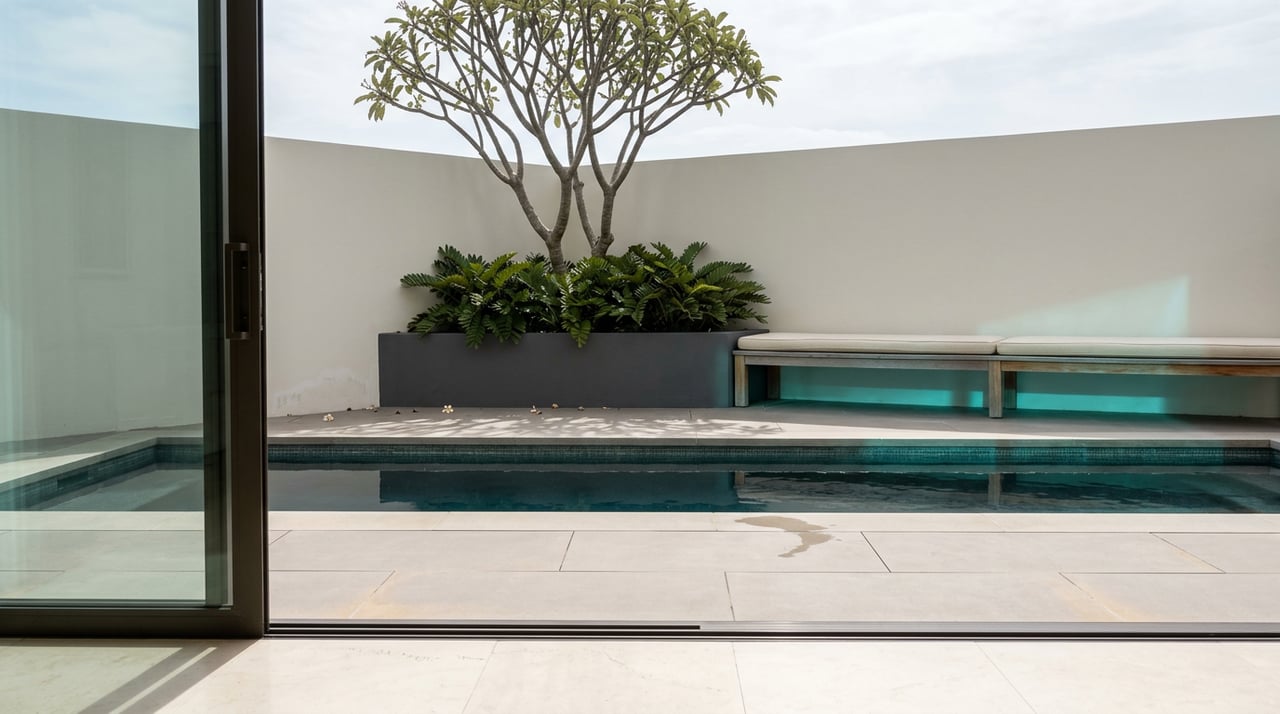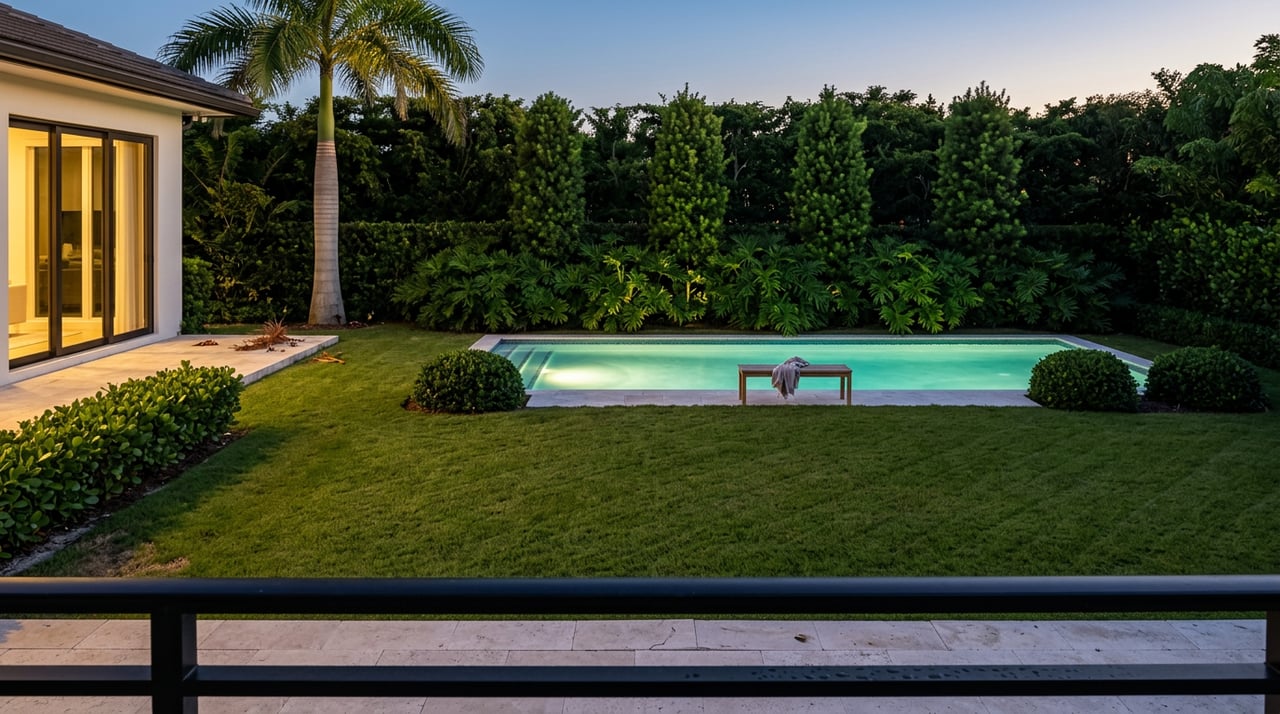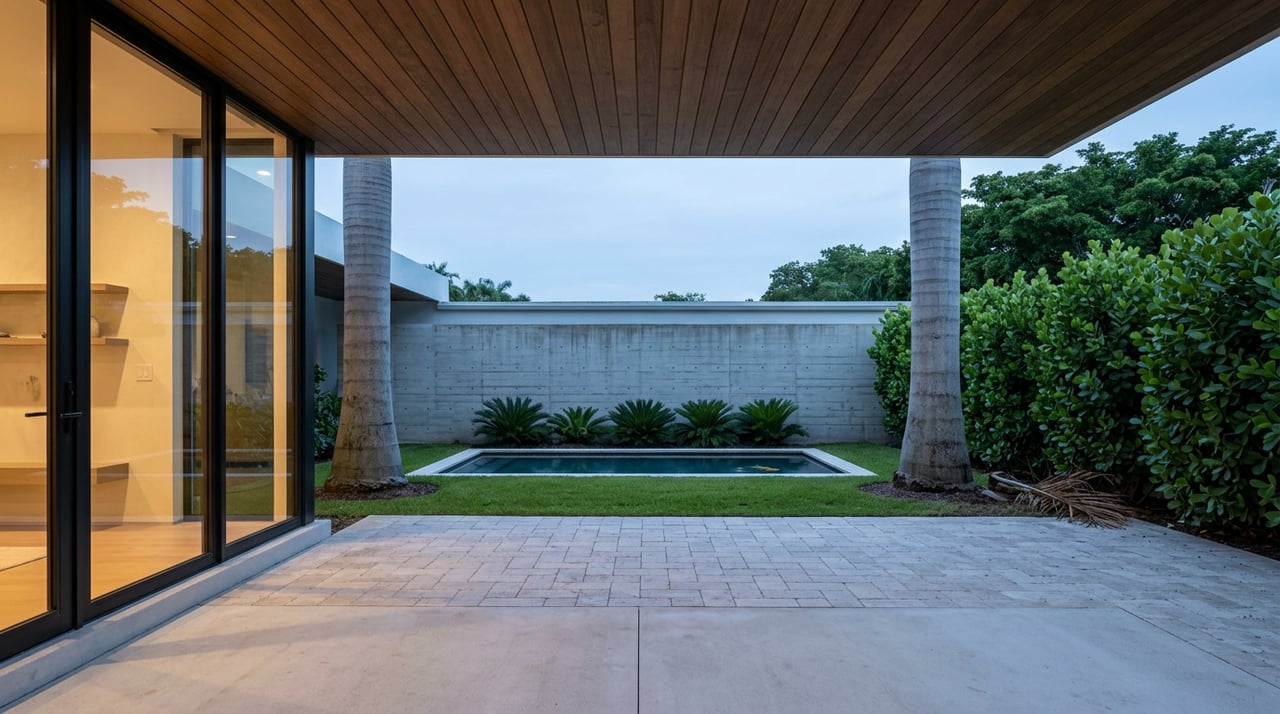
Most Coconut Grove buyers come to Bay Heights with the wrong mental model. They see seven quiet streets, a perimeter wall, and 24-hour patrol and file it next to The Moorings, Camp Biscayne, and Hughes Cove in the "gated Grove" category. It is not in that category, and the market has never priced it as if it were.
Bay Heights is walled, not guard-gated. It is non-waterfront in a neighborhood where waterfront is the whole story. And in a 2026 Miami market that has finally tipped in the buyer's favor, that combination is doing something interesting: it is opening the widest negotiating window Bay Heights has offered in years, for the buyer who understands why.
The wall is not a gate, and that matters at the closing table
The distinction sounds semantic until you sit through a transaction. A guard-gated address like The Moorings, Camp Biscayne, or Hughes Cove has a staffed entry, an access log, and a homeowner association budget that funds it. Bay Heights has a wall, a set of seven streets, and off-duty patrol coverage. The security experience is real, but the mechanism is different, and it shows up in three places buyers rarely think about until they are already in escrow:
- Insurance underwriting. Carriers underwrite "gated" and "patrolled" differently. Bringing a policy in without confirming the enclave's classification is how people get surprised at renewal.
- Resale narrative. A future buyer who wants "gated Grove" will not check the Bay Heights box. A future buyer who wants "quiet, walled, five minutes to Brickell with a Grove address" absolutely will. Selecting for the second buyer at purchase is a pricing decision.
- HOA structure. The dues, the reserves, and the scope of what the community owns are not comparable to a fully gated peer, and the disclosures need to be read as their own document rather than skimmed against a template.
None of this is a flaw. It is the reason a Bay Heights home has historically traded below a directly comparable house inside a guard-gated Grove enclave. The wall gets you most of the privacy without the full carrying cost of the gate.
What "non-waterfront" actually buys you here
Look at a Bay Heights map and the second surprise arrives. The enclave sits directly across from Alice Wainwright Park, a 28-acre waterfront park on the southern edge of Brickell and the northern edge of Coconut Grove. This is not a green square with a swing set. The park contains the only untouched Natural Forest Community, a Tropical Hardwood Hammock, remaining inside the City of Miami, and its shoreline was rebuilt as part of the City's Shoreline Improvements project with a resilient seawall and roughly 33,000 square feet of new baywalk in permeable aggregate, designed by Curtis + Rogers Design Studio and completed in Phase 1. Phase II, covering bathroom and office building upgrades along with landscape and hardscape work, is currently underway.
That is the amenity a Bay Heights owner borrows for free. A single-family bayfront estate a few streets away in the Grove regularly clears $10 million and up, and a share of that inventory never reaches MLS. A Bay Heights buyer picks up the daily use of the water, the hammock, the baywalk, and the shaded picnic terraces without paying the waterfront line-item on a tax bill. The trade for that is the obvious one: no dock, no bay frontage, no direct view from the primary suite. For a family that values the walk more than the vessel, the math has always favored the walled side of the street.
The same logic extends to Vizcaya Museum and Gardens next door and to Kennedy Park a few minutes south along South Bayshore Drive. Bay Heights is one of the few Miami addresses where you can leave the house on foot and reach a historic estate, a hardwood hammock, and a working bayfront park inside a fifteen-minute loop.
The comp problem: 56 homes or 190?
Pull comps in Bay Heights and you immediately hit a source discrepancy. Some 2026 guides describe an enclave of 56 homes across seven streets. Others report roughly 190 single-family homes. Both are correct, and the difference matters.
The 56-home count refers to the original walled plat, the tight interior of the community where the perimeter and patrol define the boundary. The larger count reflects the wider MLS-drawn Bay Heights boundary, which sweeps in adjacent streets that share the address but not the wall. A buyer who assumes the two are interchangeable will price against the wrong comp set. A house one street outside the wall is not the same asset as a house inside it, and neither the appraiser nor the eventual resale buyer will treat them as one. The first question to ask on any Bay Heights listing is a boundary question, not a price question.
The housing stock complicates the read further. Homes here were built between 1952 and 2020, ranging roughly 1,889 to 5,231 square feet on lots between 8,500 and 22,000 square feet. The architectural mix runs from mid-century modern to contemporary, with at least one original home by early Miami architect Walter De Garmo. That build-year spread is unusual for a small Miami enclave and means each sale has to be underwritten on its own construction era, not on a neighborhood average.
Reading the 2026 price gap
The wider Miami market has slowed in a way that magnifies the Bay Heights trade. Working from the freshest data available, City of Miami single-family medians and market temperature look like this in mid-2026:
| Metric | Reading |
|---|---|
| Miami-Dade County median sale price | $575,000, March 2026 |
| City of Miami median sale price | $652,000 for the three months ending May 2026 |
| City of Miami median, April 2026 | $594,250, sale-to-list ratio 94.68% |
| ZIP 33133 (Coconut Grove, includes Bay Heights) median | approximately $1.24 million |
| Coconut Grove gated peer Treasure Trove | roughly $2 million to $6 million in 2026 |
| Grove single-family bayfront and gated estates | regularly $10 million and up, meaningful share off-market |
| Days on market, City of Miami, April 2026 | 77 days, months of supply 2.41 |
Two things pop off that table. First, ZIP 33133 is trading at roughly double the county median, which is the Grove premium doing its usual work. Second, the sale-to-list ratio below 95% and the stretched days on market confirm what MIAMI REALTORS chief economist Gay Cororaton has called a buyer's market through mid-2026. In Bay Heights specifically, that softness is compounding on a structural discount that already existed. A walled, non-waterfront address in the Grove has always priced under a guard-gated waterfront one. In 2025 it did so with two offers on the table. In 2026 it is doing so with one offer, a longer inspection period, and a seller who is no longer certain a second buyer is right behind the first.
For a move-up family or a relocating executive who wanted "the Grove with a Brickell commute," this is the year that pencils. For a longtime owner considering a sale, it is the year to price with the softness in mind and to lean on preparation, not aspiration, at listing.
A short FAQ for buyers cross-shopping the Grove
Is Bay Heights considered part of Coconut Grove or Brickell? It is North Coconut Grove, sitting just over South Miami Avenue with the southern boundary of Brickell across the street. Public school assignments run through Grove and Gables catchments, and the address reads as Miami, 33133.
Why does Bay Heights price below The Moorings or Camp Biscayne if they are so close? Two reasons stack. Bay Heights is walled with patrol rather than staffed at a guardhouse, and it is not on the water. Those two facts alone account for most of the price gap, and both are visible on a site walk.
Does the absence of waterfront hurt long-term value? It caps the ceiling and it lifts the floor. A Bay Heights home will not chase the top of the Grove bayfront market, and it will not carry the insurance and seawall exposure that comes with it either. In a softening market, the floor matters more than the ceiling.
Are there Walter De Garmo homes still standing here? At least one original De Garmo home anchors the fabric of the enclave and has been restored. Any listing that claims De Garmo provenance should be verified through permit history before that claim influences price.
If Bay Heights is on your short list, or if you already own here and are thinking about a 2026 sale, the value of the address is in reading the frictions correctly, not in accepting the headline. That is the work. Elena Kemper Group has been walking Grove buyers and sellers through exactly this kind of decision for four decades. When you are ready to talk through the specifics of your block, your build year, and your timing, we are here to sit down with you.