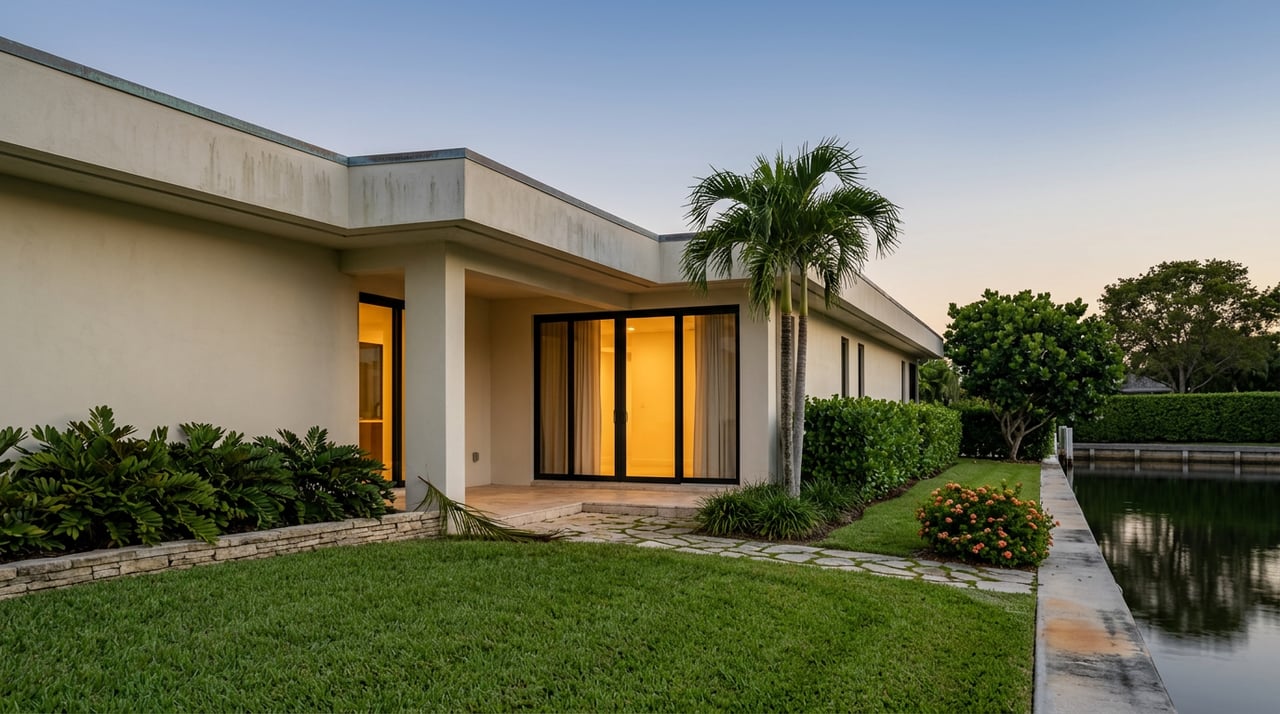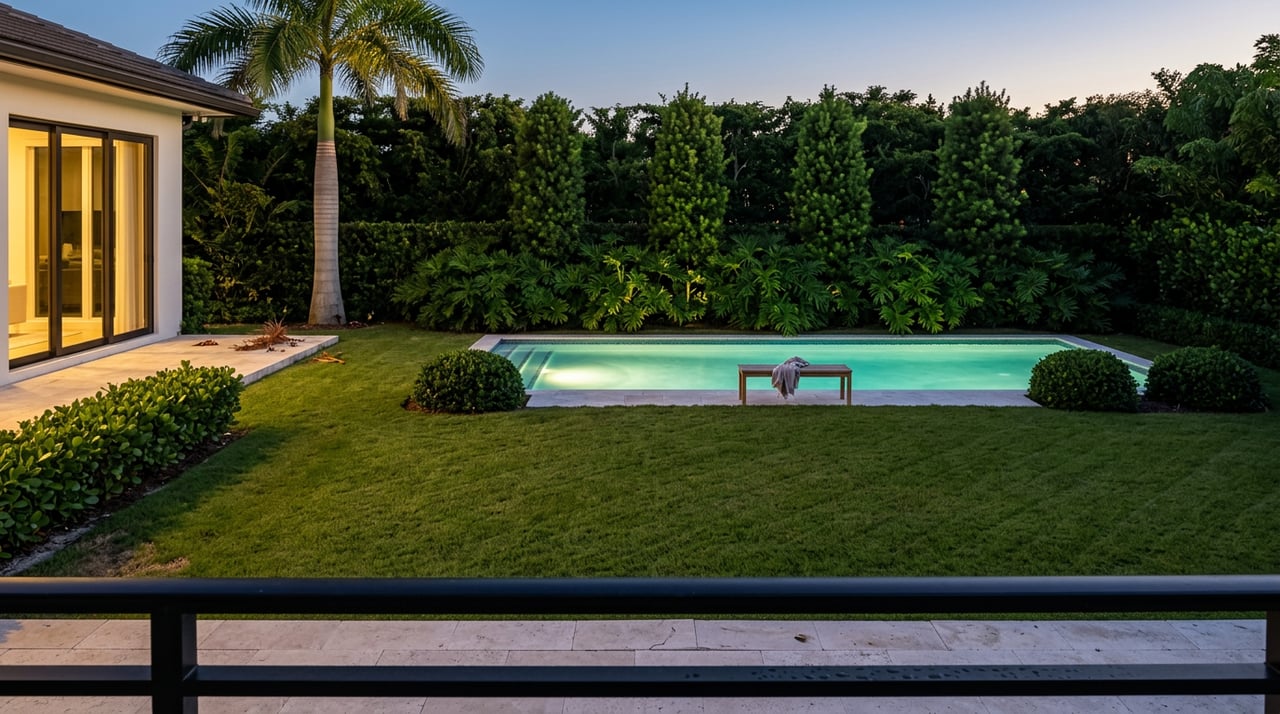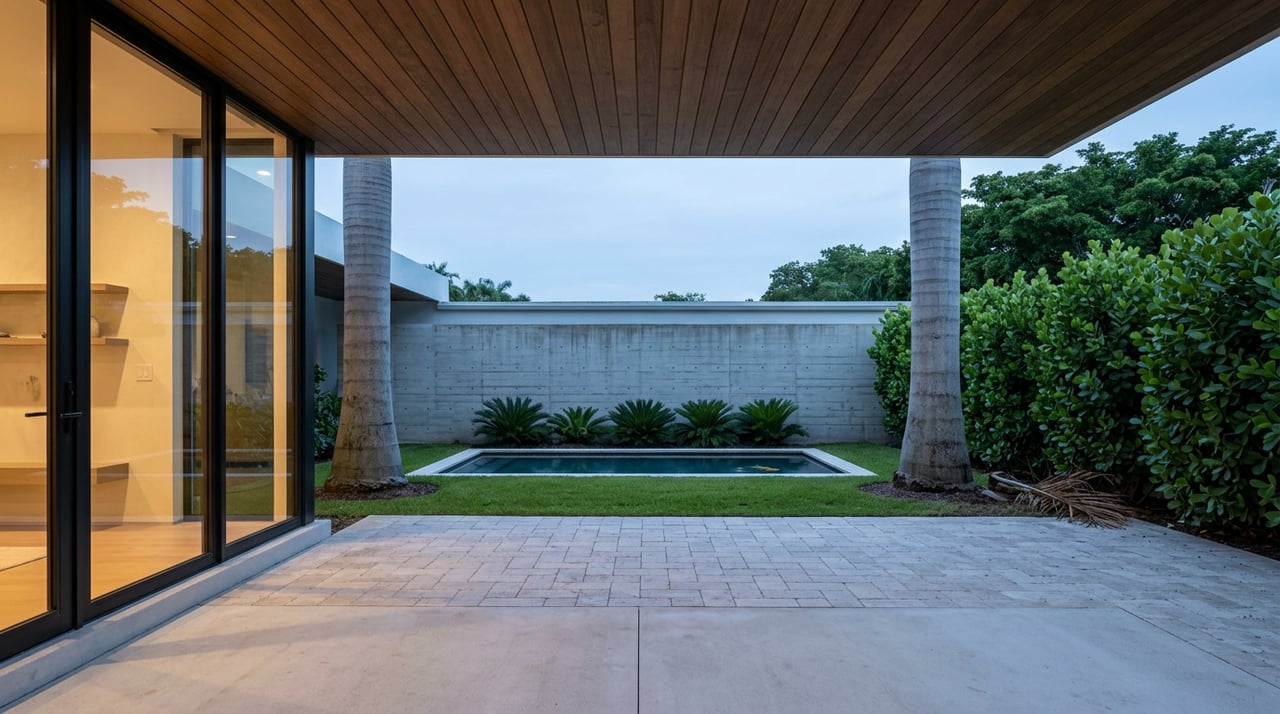
Pull up three real estate sites and search "The Roads, Miami" on the same afternoon, and you will get three different answers to what should be a simple question: what does a home here actually cost. One site will show you a number in the low $1.2 millions. Another will show you something closer to $1.6 million. A third, filtered to new construction only, lands north of $1.4 million and climbing. None of these numbers are wrong. They are measuring different things, and the gap between them is the most useful piece of information a buyer can have about this nine-block triangle west of Brickell.
The Roads is not confusing because the data is bad. It is confusing because the neighborhood itself is not one market. It is two, occupying the same nine blocks, and the median price you see depends entirely on which one a given site happened to sample.
The Number Changes Depending on Which Slice You're Looking At
As of late August 2026, Redfin's new-construction filter for The Roads showed 15 homes listed at a median asking price of $1.43 million, with most sitting on the market a median of 125 days and drawing an average of one offer. That is a slow, thin slice of the market, and it is skewed almost entirely toward brand-new, architect-built spec homes rather than resales.
Homes.com's broader trailing-twelve-month figure, which blends every closed sale regardless of vintage, put the median sale price at $1.2 million, down 11 percent from the prior twelve months, with homes here spending a median of 101 days on market against a national average of 54. That decline and that slower pace both point to a market absorbing more inventory of one kind than the headline number suggests.
Movoto's snapshot from May 2026 told a third story: a median listed price of $1.59 million, $767 per square foot, and a median 63 days on market, unchanged from May 2025. To carry that median price with 25 percent down, Movoto estimated a household would need roughly $306,000 in annual income.
Three sources, three different windows, three different numbers, all defensible. The reason they diverge by more than 30 percent is not sloppy data. It is that The Roads currently has two distinct products trading side by side, and depending on which month and which filter a site uses, the mix shifts.
Why the Same Nine Blocks Produce Two Different Products
Mary Brickell platted this neighborhood in January 1922, days before her death, laying it out as a pedestrian-friendly grid of wide streets, roundabouts and native landscaping she called Brickell Hammock. Every lot sold in a single day, February 1, 1923. The roads run about 45 degrees off the standard Miami-Dade grid, which is why every street here is called a Road instead of a Street or Avenue, and why Coral Way makes its famous diagonal jog as it crosses SW 12th Avenue. The Miami Roads Neighborhood Civic Association has been organizing around that legacy since 1986.
That history is real, and it shows up in the housing stock: original Mediterranean Revival homes from the 1920s through 1940s, many lovingly restored, sit on some of the neighborhood's original lots. But here is the detail that explains everything else: The Roads has never carried an official historic district designation the way some Miami neighborhoods have. The City of Miami requires a Certificate of Appropriateness before altering a property that is individually designated as historic or sits inside a designated historic district. The Roads, despite its age and its reputation, is neither. A teardown here does not trigger that review.
That absence of protection is doing real work in the price data. It is why a project like Villa Verano, a newly completed modern home offering nearly 5,800 square feet with a resort-style pool courtyard and a loft master suite floating over the ground floor, can rise on a lot that once held something from the 1920s. It is why The Roads Townhomes, a seven-unit project at 84 SW 28th Road developed by Rick Mattaway of Orange State Partners and designed by Jason R. Chandler of Chandler Architecture, could clear the Florida Chapter of the American Institute of Architects' design jury for its poured-concrete facade and go up as new construction rather than a renovation. Mattaway has been developing property in South Florida since 1980, and his newest project is competing directly against the neighborhood's original housing stock for the same buyer pool.
At least one recent listing in the neighborhood carried a T6-8-O zoning designation paired with an underlying Commercial-Neighborhood land-use classification. That is not the profile of a neighborhood locked into single-family scale forever. It is a reminder that the zoning under some of these lots already permits more than what is standing on them today.
What "Built Out" Actually Means for a Buyer
The Roads is widely described, even by other local sources, as nearly built out, with very few vacant or underbuilt lots remaining. That scarcity is the second half of the mechanism. When a neighborhood is full and a chunk of its remaining stock is functionally obsolete, small original homes on original lots stop competing as move-in-ready houses and start competing as teardown candidates. Their price gets set less by their current square footage and more by what a buyer is legally allowed to build in their place.
That is why the homes.com trailing figure and the Movoto live-listing figure can both be true at the same time. The trailing sold data still carries the last wave of older homes changing hands at their as-is value. The live listings increasingly reflect what a lot is worth once a buyer prices in new construction. As more of the original stock gets absorbed into that second category, the blended median will keep drifting upward, even if no individual home's finished value changes.
For a buyer cross-shopping The Roads against another established, older Miami-Dade neighborhood, this matters more than the headline median. Some nearby historic-feeling neighborhoods do carry an official historic district designation, which caps how freely a buyer can redevelop a given lot. The Roads does not carry that same layer. A buyer who assumes "historic neighborhood" means the same thing everywhere is comparing two different regulatory environments, not two similar streets.
Reading a Listing Here
Before treating any listed price in The Roads as representative, ask which category the home falls into. A restored 1920s or 1930s home on its original footprint is being priced against a shrinking comparable set. A new or newly permitted build is being priced against Villa Verano and the townhome projects going up around it, an entirely different comparable set with different buyers and different financing profiles. The zoning classification on the listing sheet, not just the current structure, tells you which market you are actually shopping in.
A Few Questions Worth Asking Before You Tour
Is The Roads a legally protected historic district? No. It has old homes, historic private schools and a long civic history, but it does not carry the individual designation or historic district status that would require a Certificate of Appropriateness before a teardown or major alteration.
Why do lot sizes and zoning vary so much block to block? The neighborhood was platted as a single development in 1922, but nearly a century of individual sales, subdivisions and zoning updates means some lots now carry different underlying land-use classifications, including at least one recent listing zoned for a commercial-neighborhood overlay. Always confirm current zoning directly rather than assuming it matches the house currently on the lot.
Does a lower median price mean The Roads is more affordable than it looks? Not necessarily. A lower trailing median can reflect a wave of older, as-is homes selling below replacement cost rather than genuine affordability. The live-listing medians, which increasingly capture new-construction pricing, are a better signal of what it costs to buy something finished today.
If you are trying to figure out which of these two markets a specific address actually belongs to, and what that means for financing, timeline or resale, Elena Kemper Group works this part of Miami closely enough to walk you through it property by property. Contact us before you tour, not after.