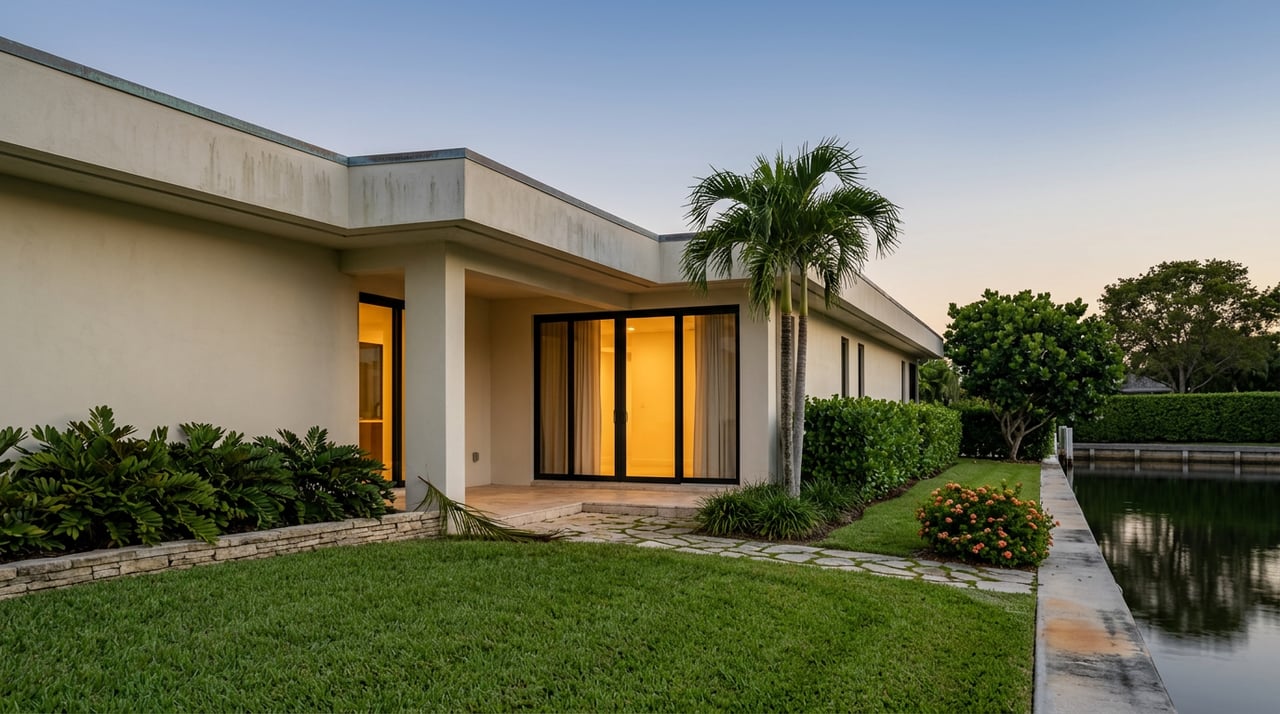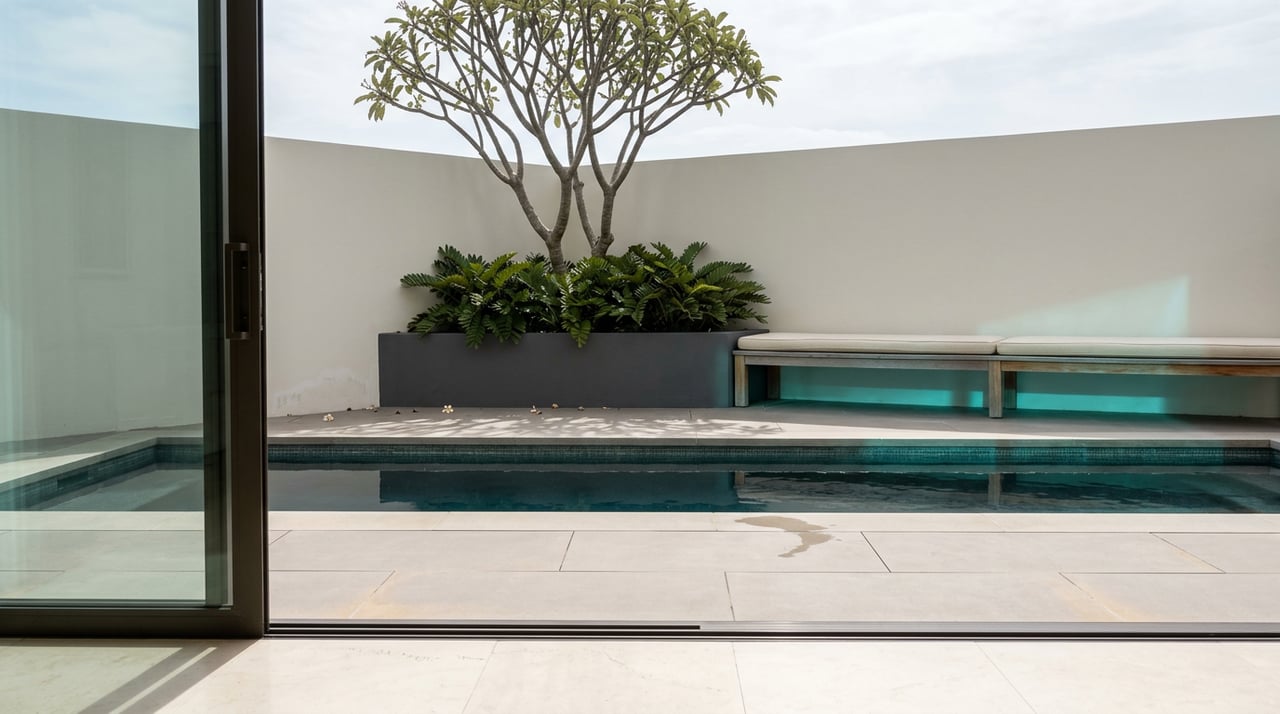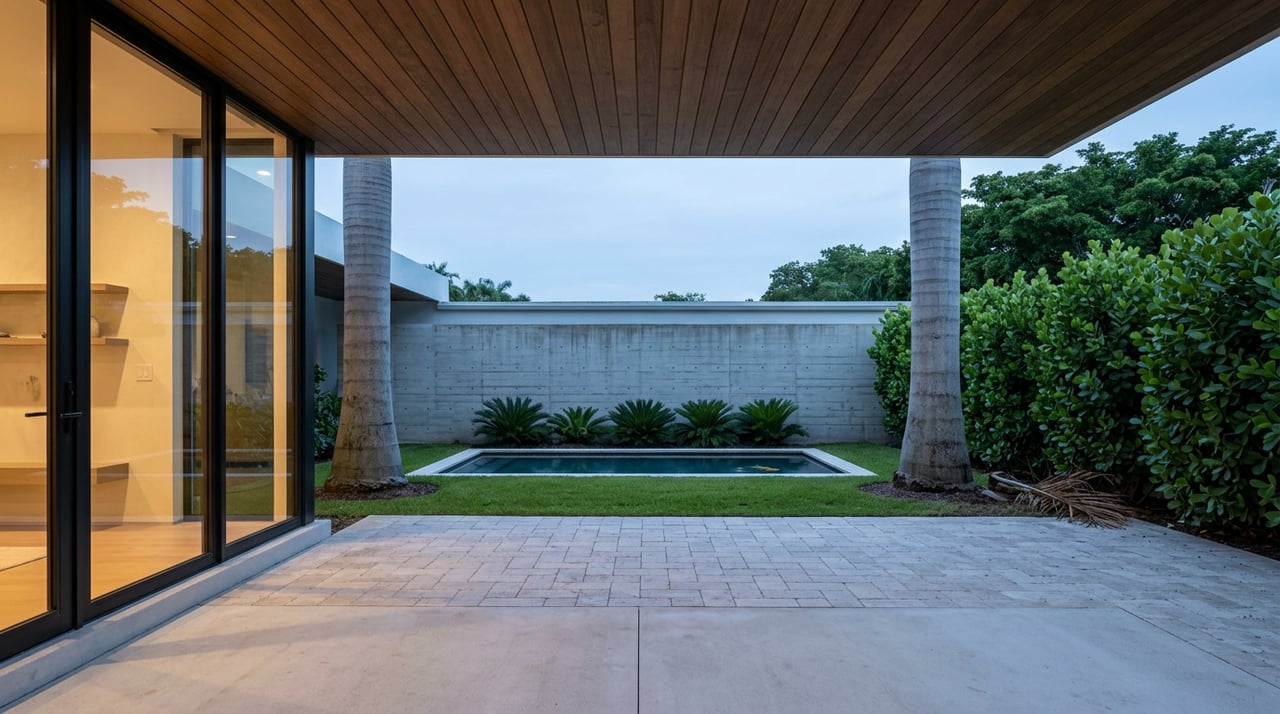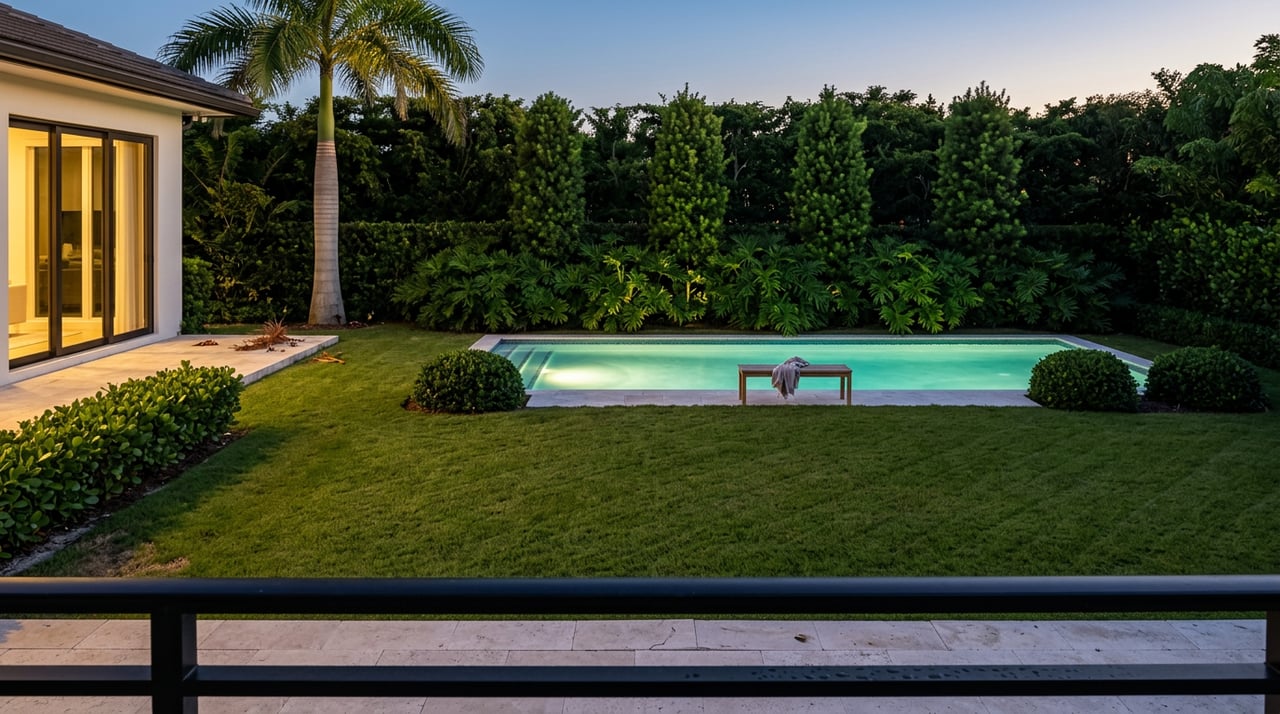
A house at 6060 SW 118th Street went under contract in the last week of August 2026, asking $9.6 million for 6,800 square feet, or $1,400 a square foot. It was the second most expensive home to go under contract in Miami-Dade County that week, according to the weekly luxury market tracking published by The Real Deal. The home was built in 2023. The sellers had bought the underlying property for $1.1 million in 2020.
Nothing about that gap is a story about appreciation. Three years is too short a window for a 1,900-square-foot ranch to become worth nine figures on its own. What happened instead is that the property switched categories, from a lot with a house on it to a finished, code-current estate with a lot underneath it. In Pinecrest, that switch is the entire market.
The Rule That Makes the Acre the Real Asset
Pinecrest incorporated as a village on March 12, 1996, and its EU-1 estate zoning set a one-acre minimum lot size across most of the community. That single rule is why Pinecrest reads differently from Coral Gables or Coconut Grove, where value tends to track architecture and block reputation. In Pinecrest, the lot itself is the fixed input. Nobody is subdividing an acre into two half-acre parcels. Nobody is adding density to absorb demand. The number of one-acre building sites in the village is what it was in 1996, and it is what it will be next year.
That scarcity is why the July 2026 active single-family data from the Southeast Florida MLS shows a median lot size of roughly 0.85 acres across listings ranging from $1.3 million to $22.5 million. A buyer at the low end and a buyer at the top of that range are competing for the same underlying resource. What separates them is what has already been built on it, and how much construction risk they are willing to absorb themselves versus paying someone else to have absorbed already.
Same MLS, Two Different Products
Walk through the active listings and you will find a typical home built around 1997, asking close to $987 per square foot, a figure right in line with the broader market's median list price. Walk two streets over and you will find a 2026 spec build asking closer to double that per foot. Both are Pinecrest. Both sit on comparable acreage. They are not the same purchase.
The 1960s or 1970s ranch is, functionally, a way to buy the land. Miami-Dade sits inside the High-Velocity Hurricane Zone, the most demanding wind-design standard in the Florida Building Code, and a home built before that code tightened will eventually need a new roof attachment system, impact-rated glazing, and updated electrical and plumbing to insure cleanly at current rates. The buyer of that house is pricing the lot and accepting the renovation or rebuild as their own project, on their own timeline, at their own risk.
The new-construction buyer is paying to skip that project entirely. A home finished in 2023 or 2026 delivers current code, documented system ages, and the kind of insurability that makes underwriting straightforward instead of a negotiation. That certainty is the product, and the market prices it accordingly. The same week 6060 SW 118th Street went under contract, a separate new-build mansion led the entire county's luxury market with a $16.3 million asking contract, a reminder that the top of Pinecrest's new-construction tier is now setting the pace for all of Miami-Dade's high end, not just its own village.
Why the Median You Read Online Depends on Which Number You Grabbed
If you have already looked up Pinecrest and come away confused by conflicting numbers, that is not bad research on your part. It is the market itself refusing to compress into one figure. The MLS-based active listing report from July 2026 puts the median asking price at $4.7 million with an average of $6.1 million. That gap between median and average exists because a handful of estate listings at the very top pull the average well above what a typical Pinecrest home is actually asking. The median is the number to anchor on if you want a sense of the middle of the market, not the average.
Zillow's home value index, updated through June 2026, showed an average home value of about $2.26 million, up 2.8 percent over the prior year. That figure sits far below the MLS single-family median because it blends a broader mix of property types and weights toward homes that have actually sold and closed, rather than what current sellers are asking today. Neither number is wrong. They are measuring different things.
Monthly sales counts compound the confusion. Redfin logged just 18 home sales in Pinecrest in November 2025, with a median sale price up nearly 40 percent year over year. A month that thin can swing wildly based on which two or three estates happened to close, which is worth remembering before treating any single month's year-over-year percentage as a trend rather than a snapshot of a small sample.
What to Actually Check When Two Listings Look the Same on Paper
If you are comparing an older Pinecrest home against new construction at a similar price point, the number on the listing sheet tells you less than the answers to these questions:
- What is the roof's age and attachment method, and does it meet current wind-design code
- Is the glazing impact-rated, or will it need to be upgraded for full insurability
- Are electrical and plumbing systems original, and can their ages be documented for an insurer
- What is the lot's actual usable footprint once setbacks and any easements are accounted for
- Has the home been renovated to current code, or renovated cosmetically without addressing the systems underneath
Two homes priced within a few hundred thousand dollars of each other can represent very different total cost of ownership once insurance premiums and near-term capital needs are factored in. That is not a reason to avoid the older stock. Some of the best long-term equity positions in the village are exactly what one 2026 forecast called "good bones," a well-located acre with a dated house that hasn't been fully renovated yet. It is a reason to price the renovation or rebuild honestly before comparing it to a finished new build.
A Few Questions Worth Asking Before You Compare Numbers
Does a lower price per square foot always mean a better deal? Not on its own. A lower per-foot price on a 1960s ranch usually reflects the cost of code and system upgrades you will need to fund yourself. Price the renovation before comparing the two figures directly.
Is it smarter to buy the ranch and rebuild, or buy new construction outright? That depends on your tolerance for managing a construction project and your timeline. Out-of-state and relocating buyers who want to move in without overseeing a build tend to gravitate toward finished new construction, even at a premium, because the certainty is the thing they are actually purchasing.
Why do Zillow, Redfin, and MLS-based reports show different Pinecrest medians? Each pulls from a different universe of data, active listings versus closed sales, single-family only versus a broader mix of property types, and each updates on its own schedule. Treat any single portal figure as a starting point, not the final word on what a specific property is worth.
Pinecrest rewards buyers and sellers who understand which of these two markets they are actually in before they negotiate. If you are trying to figure out whether a specific property is priced as a land play or a finished product, or you are preparing to sell and want to know which buyer pool your home should be positioned toward, Elena Kemper Group has spent decades reading Pinecrest block by block. Reach out, and let's talk through what your acre is actually worth right now.